
New Makers
Sarfo Emmanuel, Ghana
Sarfo Emmanuel Annor is a young Ghanaian visual artist from Koforidua who uses vibrant colors to capture the stories and dreams of local youth. Through portraiture, he aims to portray a beautiful African narrative while offering a form of emotional therapy through his art. Starting with just a smartphone camera, Annor’s work highlights the demographic importance of African youth and offers an optimistic vision of the continent’s future, revealing both beauty and underlying socio-economic realities.

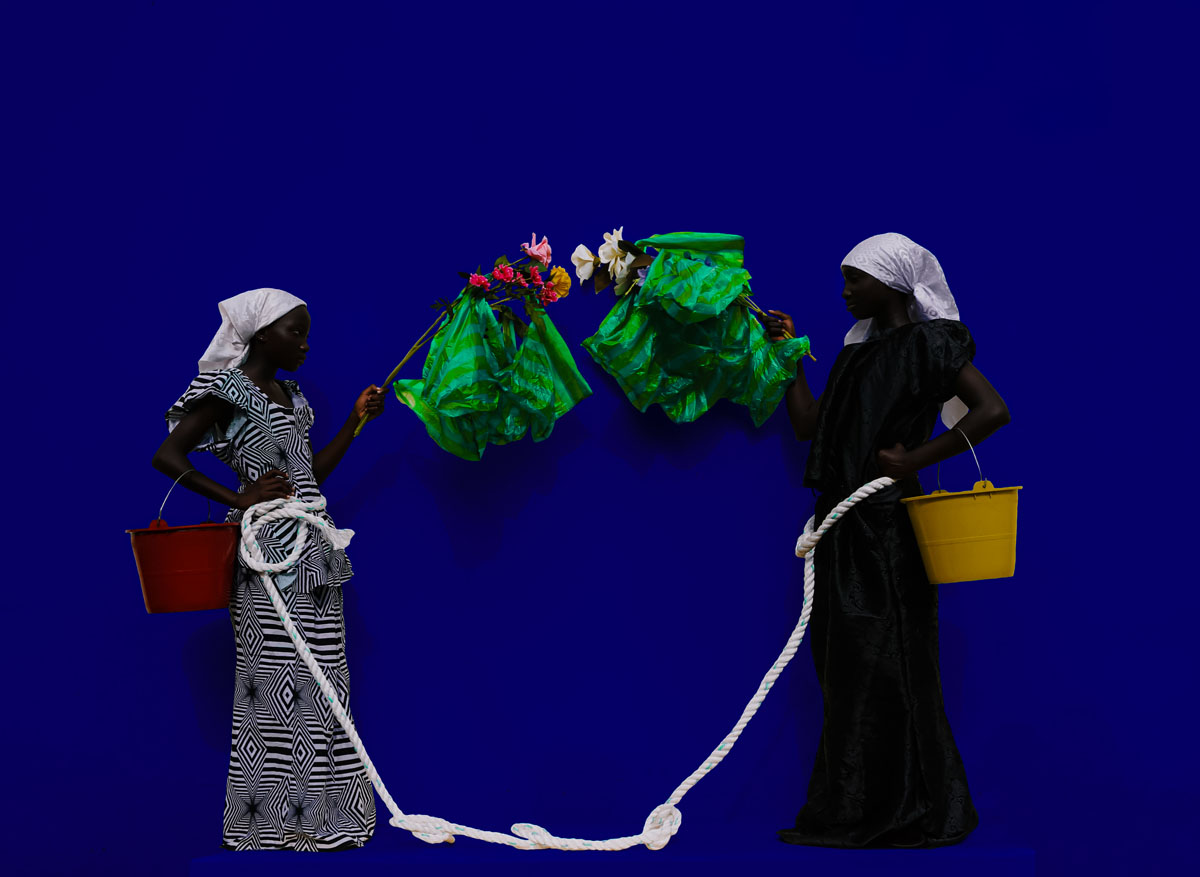
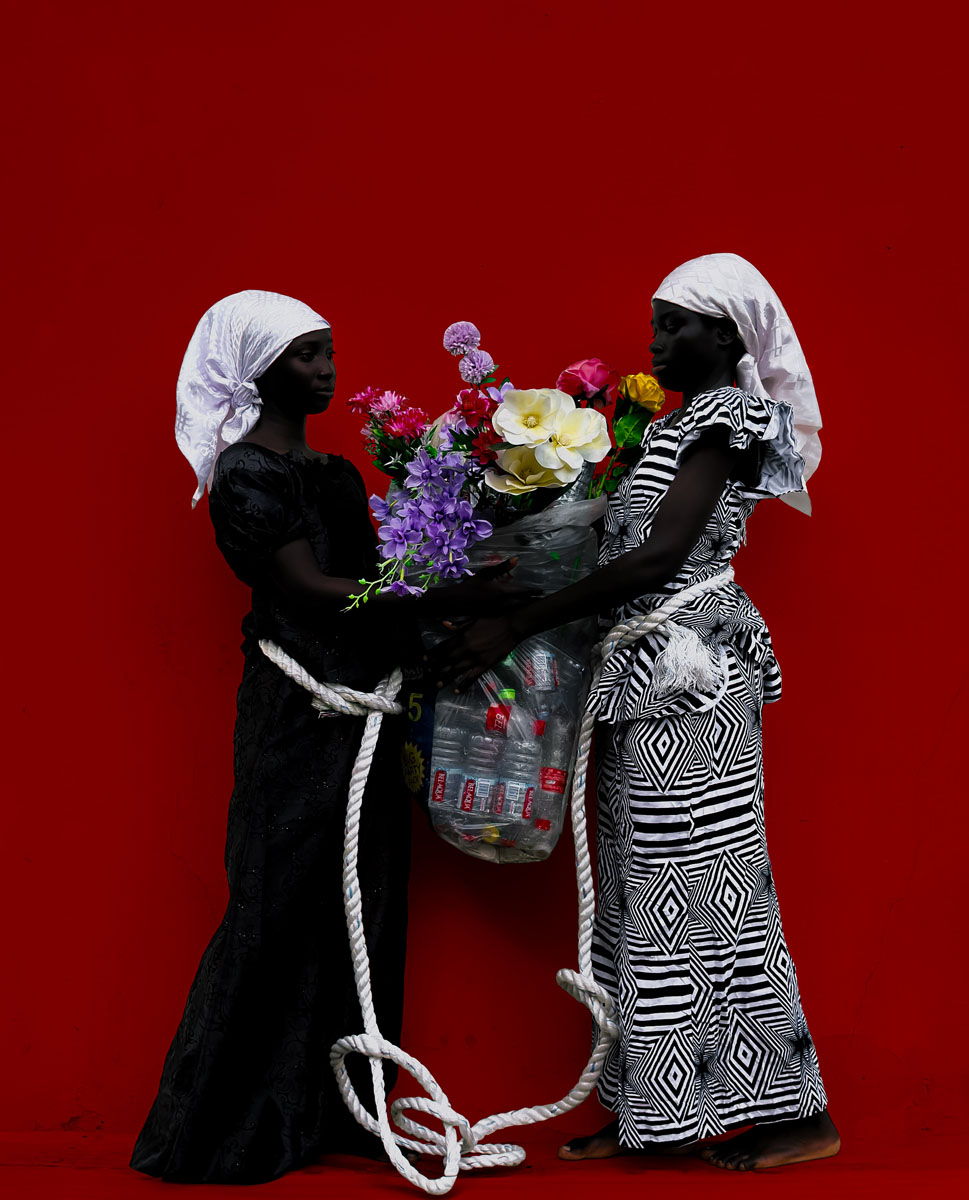
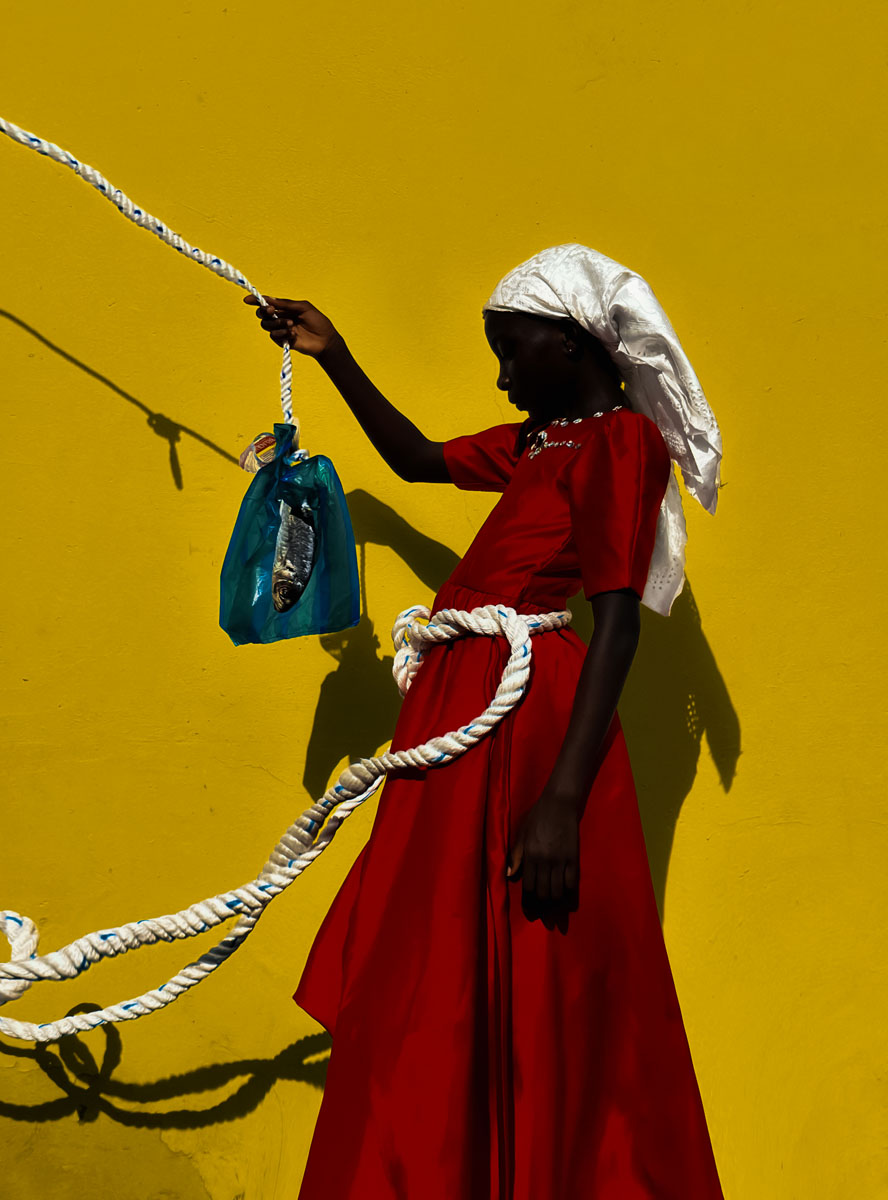


In Koforidua, capital of Ghana’s Eastern Region, plastic is no longer waste: it becomes raw material in the hands of Esi, Asana, Abena, and Afia Nyame. These four young girls transform used water sachets and discarded bottles into jewelry, clothing, and everyday objects, embodying the spirit of sankofa – that Akan principle which invites us to draw from the past to build the future.
Where one might expect a damning assessment of urban pollution in Ghana, Sarfo Emmanuel Annor, 23, chooses to photograph action rather than helplessness.
New Makers questions our relationship to documentary truth: must we still show open-air dumps when the world looks away? The artist responds with a poetic and luminous reinterpretation, where color and optimism become critical weapons. His images do not fix a past of destruction; they set in motion a future where local creativity concretely addresses environmental crises.
Through innovative digital technique that elevates the recycled materials worn by his subjects, Annor constructs an ethical narrative turned toward tomorrow. His work demonstrates that contemporary photography can transcend mere testimony: it can embody the solution, celebrate community initiative, and make yesterday’s observation the fertile ground for today’s inventions.
These young girls do not endure their environment; they reinvent it. And with them, Annor proves that a generation of African artists now refuses to document misery to feed external gazes. They create their own narratives, rooted in creative autonomy and the resilient beauty of their communities.”