
From 24,189 entries from 132 countries, the jury of the Global Peace Photo Award selected the work “No one can take my Soul” by Iranian photographic artist Mahdi Vaghari as the Peace Image of the Year 2025.
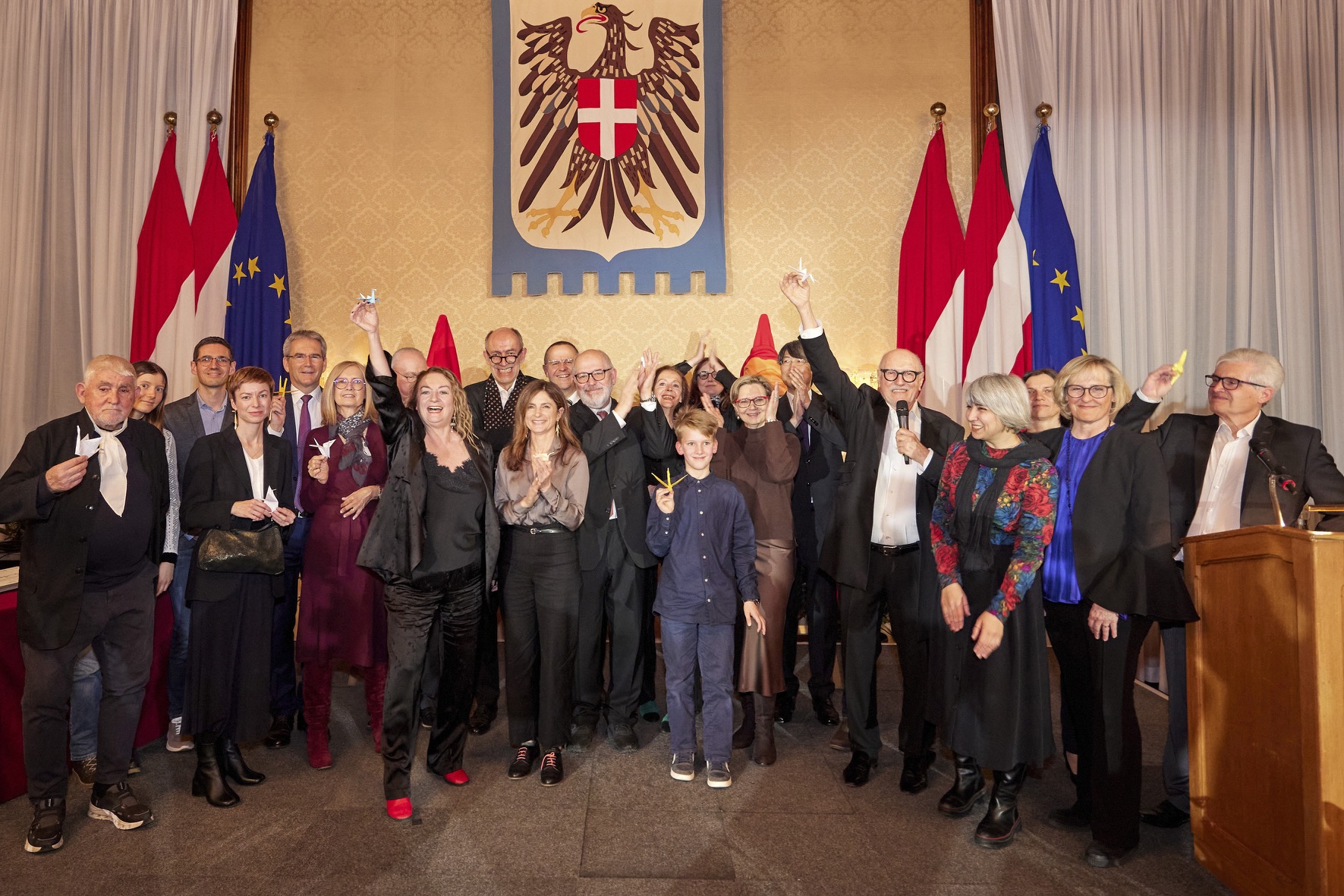
30 March 2026, Vienna City Hall. This evening, the winners of the international Global Peace Photo Award photography competition were presented with the Alfred Fried Peace Medal for the thirteenth time.
In the presence of the Japanese Ambassador to Austria, Iwama Kiminori, the keynote address of the evening was delivered by Terumi Tanaka, Secretary-General of Nihon Hidankyo, a Japanese peace organisation which was awarded the Nobel Peace Prize in 2024. Nihon Hidankyo was founded by survivors of the atomic bombings of Hiroshima and Nagasaki and campaigns for international nuclear disarmament.
The award gala took place at the invitation of the Mayor of Vienna, Michael Ludwig – who was represented by Omar Al-Rawi, a member of the City Council and the Vienna Provincial Parliament – in the Wappensaal of Vienna City Hall, which was filled to capacity.
Winners of the Global Peace Photo Awards 2025
Children’s category:
Noa Hagemann from Germany for “My Sister”
Single Image Category:
Mahdi Vaghari from Iran for “No one can take my Soul”
Photo Series:
Fereshteh Eslahi from Iran for “But we were so strong”
Diego Ibarra Sánchez from Spain for “LBN: On the roaring of the bus”
Ami Vitale from the USA for “Kenya’s Black Rhino Revival”
In his welcoming address, Omar Al-Rawi, who attended on behalf of the Mayor of Vienna, Michael Ludwig, emphasised how important it is to provide a forum for peace in these times. Only through dialogue will we succeed in overcoming the current wars. Only liberal democracies, which are able to respond clearly to differing viewpoints without marginalising them, can provide the framework for this. The Global Peace Photo Award honours photographers who have used their lens to “put their finger on the wound”.
Peace Image of the Year 2025
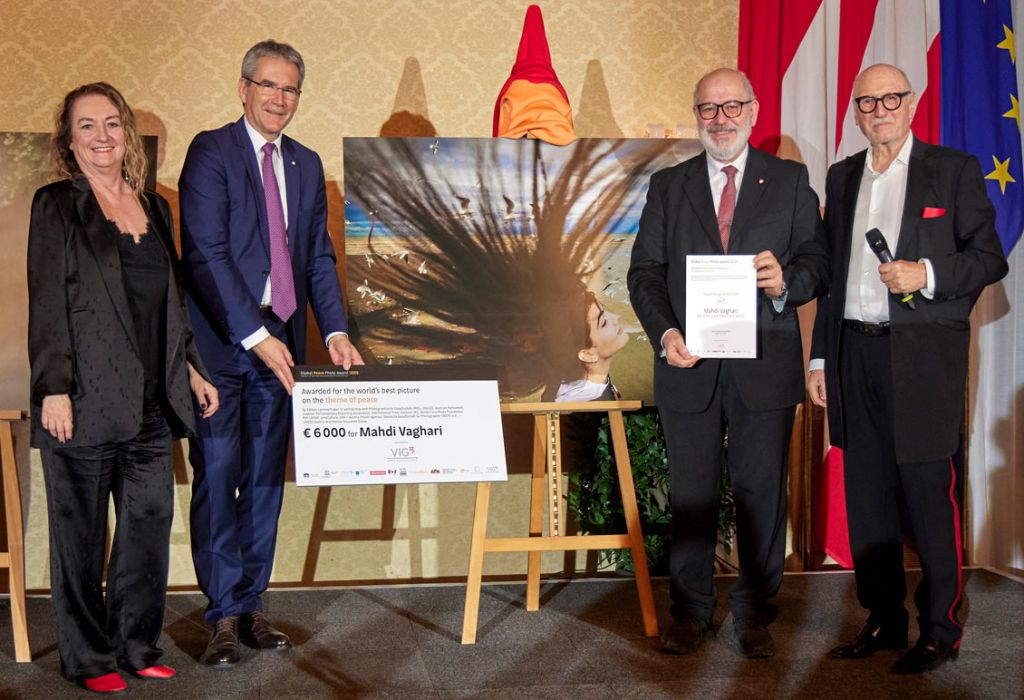
The main prize, the “Peace Image of the Year 2025”, worth 7,000 euros, went to the Iranian photographic artist Mahdi Vaghari for his image “No one can take my Soul”
No veiling, no hiding. No modesty, no sadness. Rather, pride in what a woman is not supposed to show, lest she provoke the men. A gust of wind has whipped the magnificent hair of this young Iranian woman into a wild crown. She is walking across a bridge, whilst a flock of birds flies over the nearby beach. Freedom on two levels.
An image of great power that actually – unlike so many photos – manages entirely without words. The mere fact that it was taken in Iran gives it, once again, a special significance. It was taken by a man who is not yet well known in our part of the world: Mahdi Vaghari, born in Iran in 1995, who began taking an interest in photography in 2003 and was taught by his father.
“I want to capture authentic emotions,” says Mahdi. And he does so in the hope of drawing attention to everything that could make the world a more beautiful place. And a more peaceful one. “Nobody,” he captioned his photo, as if the woman were speaking for herself, “can own my soul.”
This is how jury member Peter-Matthias Gaede summed up the merits of Mahdi Vaghari’s work in his laudatory speech.
Mahdi Vaghari was also honoured in the ‘Best Single Image’ category. The prize money of €1,000 was provided by the Austrian Photographische Gesellschaft (Photographic Society, PHG), the second-oldest photographic society in the world.
The Children’s Peace Image of the Year 2025
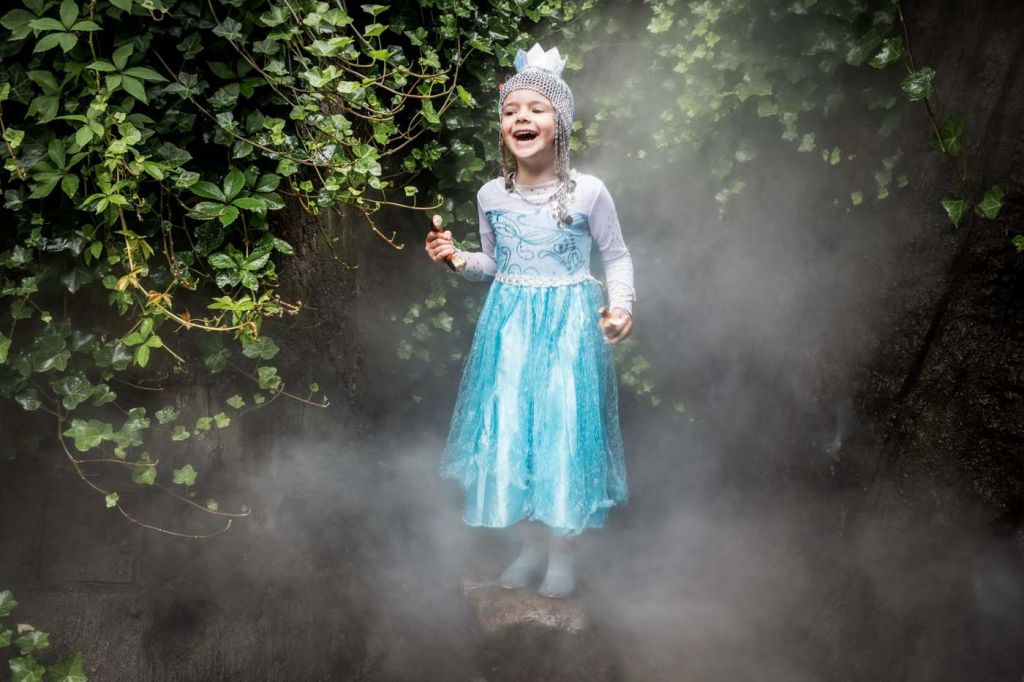
The prize for the best peace image in the children’s and youth category, “The Children’s Peace Image of the Year 2025”, worth 1,000 euros, was won by 8-year-old Noa Hagemann from Germany with his image “My Sister”.
It was taken in a zoo, and Lani, Noa’s five-year-old sister, stood like a little fairy-tale figure amongst the trees, gently enveloped in wisps of mist. Noa, who had just turned eight, photographed her spontaneously. This is worth noting, as it is not uncommon for the boy to position and direct his sister for a picture.
What does peace mean to Noa? “That everyone is happy,” he says, “that no one is arguing and there is no war in the world.”
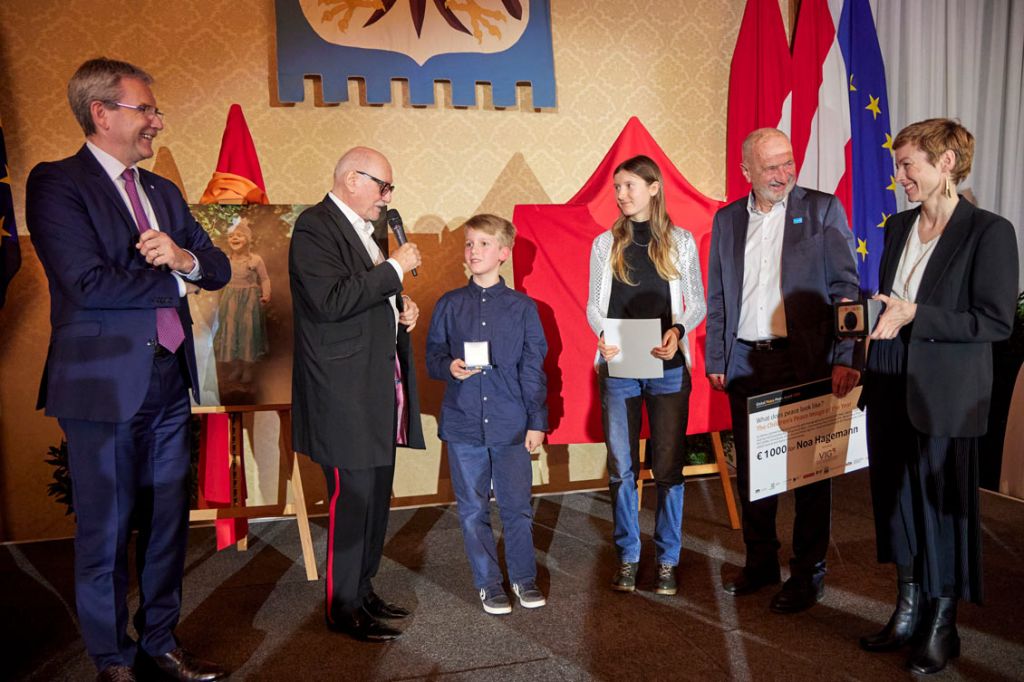
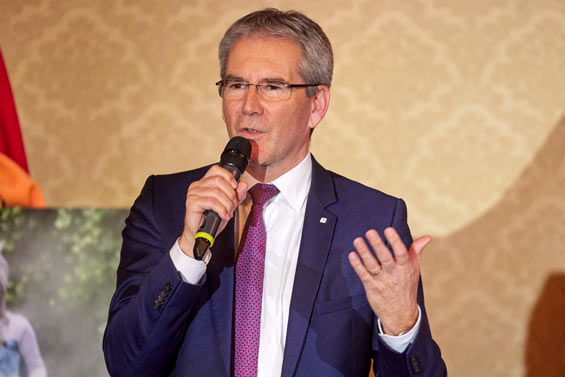
The two main prizes were presented by Hartwig Löger, Chairman of the Board and CEO of the Vienna Insurance Group (VIG), which has supported the Global Peace Photo Award as its main sponsor for many years: “Peace is of the utmost importance. As individuals and as a company, we depend on a stable and peaceful environment to thrive. That is why the Vienna Insurance Group, which operates as an international insurance group in around 30 countries, has supported the Global Peace Photo Award from the very beginning. We have been promoting the children’s peace photo since its inception, and since 2022 we have also been the main sponsor of the entire award.”
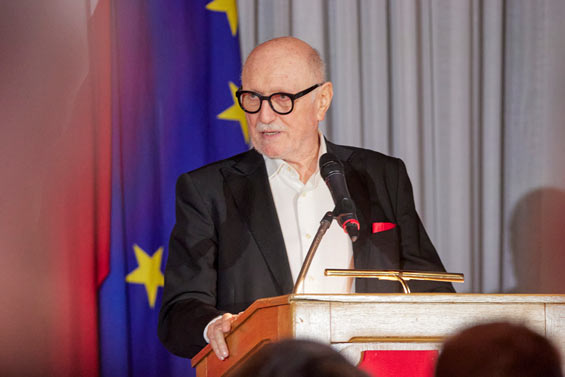
Lois Lammerhuber, who initiated the Global Peace Photo Award together with his wife Silvia Lammerhuber and has organised it since the very beginning, reminded us that “peace is not the absence of war, but something I would describe as a ‘life well lived’. With all their creative and artistic passion, the photographers compose an ode to respect for the fragility of our world. They invoke the relationships between people and nature as a mission for a responsible life. With their talents, their vision and their perspectives, they depict the social and ecological challenges that must no longer be ignored. They captivate the eye with photographs that take root in the heart the moment they are seen, and encourage us to resist indifference and the prevailing populism. An appeal to the world that is firmly inscribed in the heart of our award.”
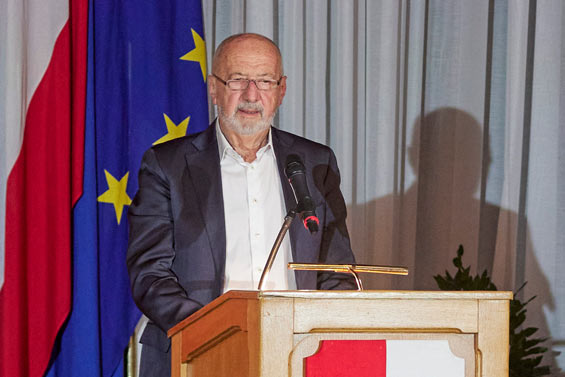
Werner Blach, Executive Director of UNICEF Austria, emphasised in his speech: “Although conflicts around the globe differ in cause and course, they share a common, harrowing reality: it is always the children who pay the highest price. Children who bear no blame whatsoever! They must be protected and urgently need peace! Children have rights – not someday, not perhaps – but always.”
The other Alfred Fried Peace Medals 2025, each accompanied by prize money of €1,000, were awarded to:
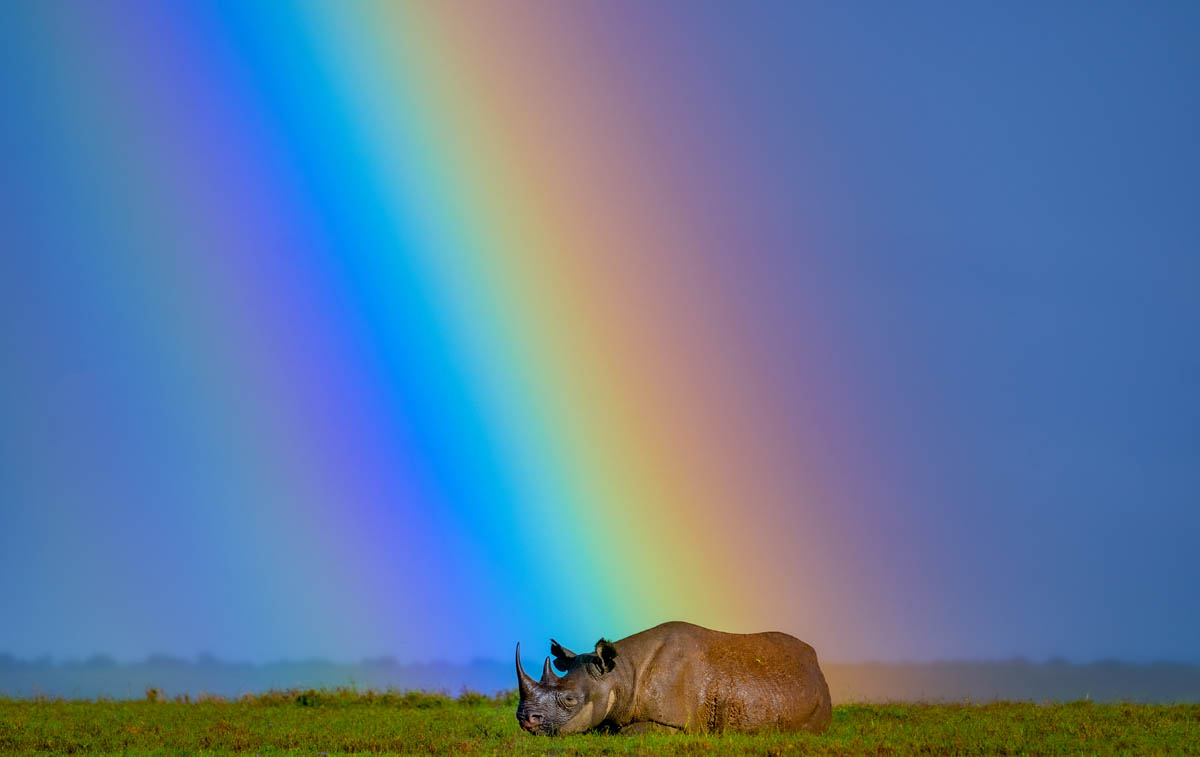
Ami Vitale, USA: “Kenya’s Black Rhino Revival”: They have inhabited the African continent for 17 million years, but poaching has decimated their population by a staggering 96 per cent. Their downfall: in parts of Asia, a powder made from the two large, long horns on their skulls is still believed to have fever-reducing, detoxifying and even cancer-curing properties.
For the reportage honoured here, the American photographer Ami Vitale documented the complex relocation of 21 endangered black rhinos to the Loisaba Reserve in northern Kenya.
Ami Vitale, born in 1971, studied before deciding to become a photojournalist. Her reports have been published in GEOand National Geographic, among others. Vitale has won a number of the world’s most prestigious awards; the significance of her work is now compared to that of women such as Jane Goodall or Christiane Amanpour.

Fereshteh Eslahi, Iran: “But we were so strong”: In May 2025, the mullah regime’s attempt to tighten the headscarf requirement for women in the country still failed. Then, in October, came the news that in the capital Tehran alone, 80,000 newly recruited “morality police” were to enforce compliance with the Islamic dress code more rigorously.
And yet: right up until the start of the Israeli and US attack on Iran, the women’s uprising continued. But it was one that expressed itself peacefully. Merely the acceptance that femininity should not be regarded as a provocation and need not be concealed in public – but is nothing other than a self-evident human right.
This desire is courageous nonetheless. The dancer on the roof, her leap with arms outstretched, is an expression of hope to be able to free oneself from dictates of all kinds. This scene was captured by the Iranian photographer Fereshteh Eslahi, who studies the everyday lives of Iranian women through her camera.
Eslahi completed a master’s degree at the University of Tehran. She has been working for Iranian photo agencies since 2014 and has been a member of an Iranian press photographers’ association since 2017. In 2021, Eslahi was awarded a World Press Photo Award.
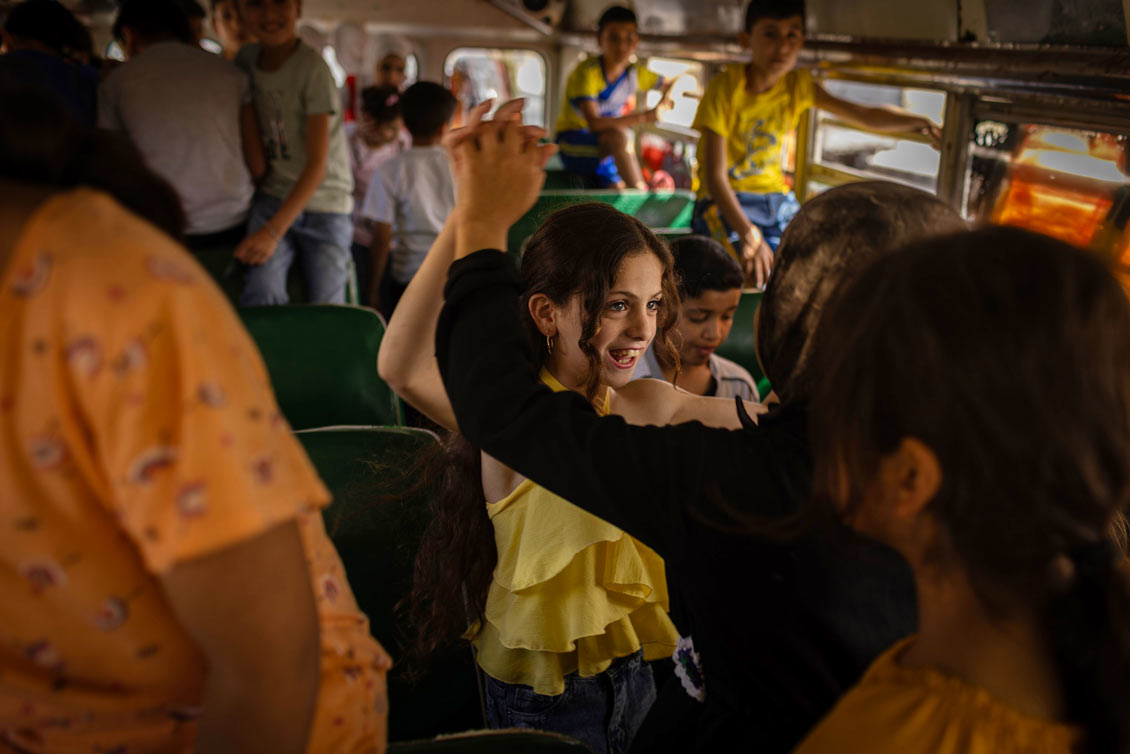
Diego Ibarra Sánchez, Spain: “LBN: On the roaring of the bus”: At the end of the Second World War, the term DP (Displaced Persons) was used to describe all those who found themselves outside their homeland; since then, there have been displaced persons in many countries around the world, including Lebanon, currently caused by Hezbollah’s attacks on Israel and Israel’s retaliatory strikes. In October 2024, there were around 94,000 people in southern Lebanon, including some 30,000 children.
To free girls and boys from the vortex of fear and terror, if only for a moment, the photographer Houssam Khatab has organised a colourful bus, the ‘Art Peace Bus’, driven by Syrian refugees, which takes the children of the city of Tyre to an old theatre palace, where they are to be entertained with various performances and workshops.“Many of the children have lost everything,” says the actor and theatre director, Kassem Istambouli, “we are trying to break the cycle of war and offer the children art as a window to greater resilience.”
Spanish photographer Diego Ibarra Sánchez, born in 1982, who lives and works in Lebanon, travelled on the Peace Bus to photograph children in a moment of exuberance. As a photographer and documentary filmmaker, Sánchez says he wants to achieve more than simply capturing events. Above all, he wants to encourage reflection on the state of our world. He has documented this world in places such as Latin America, African countries, Afghanistan, Pakistan and Lebanon. His work has appeared in the New York Times, Der Spiegel and the NZZ, and is featured in numerous exhibitions.
(Excerpts from the laudatory speeches by Peter-Matthias Gaede)
Keynote address by Terumi Tanaka, Nobel Peace Prize laureate 2024 (excerpts)
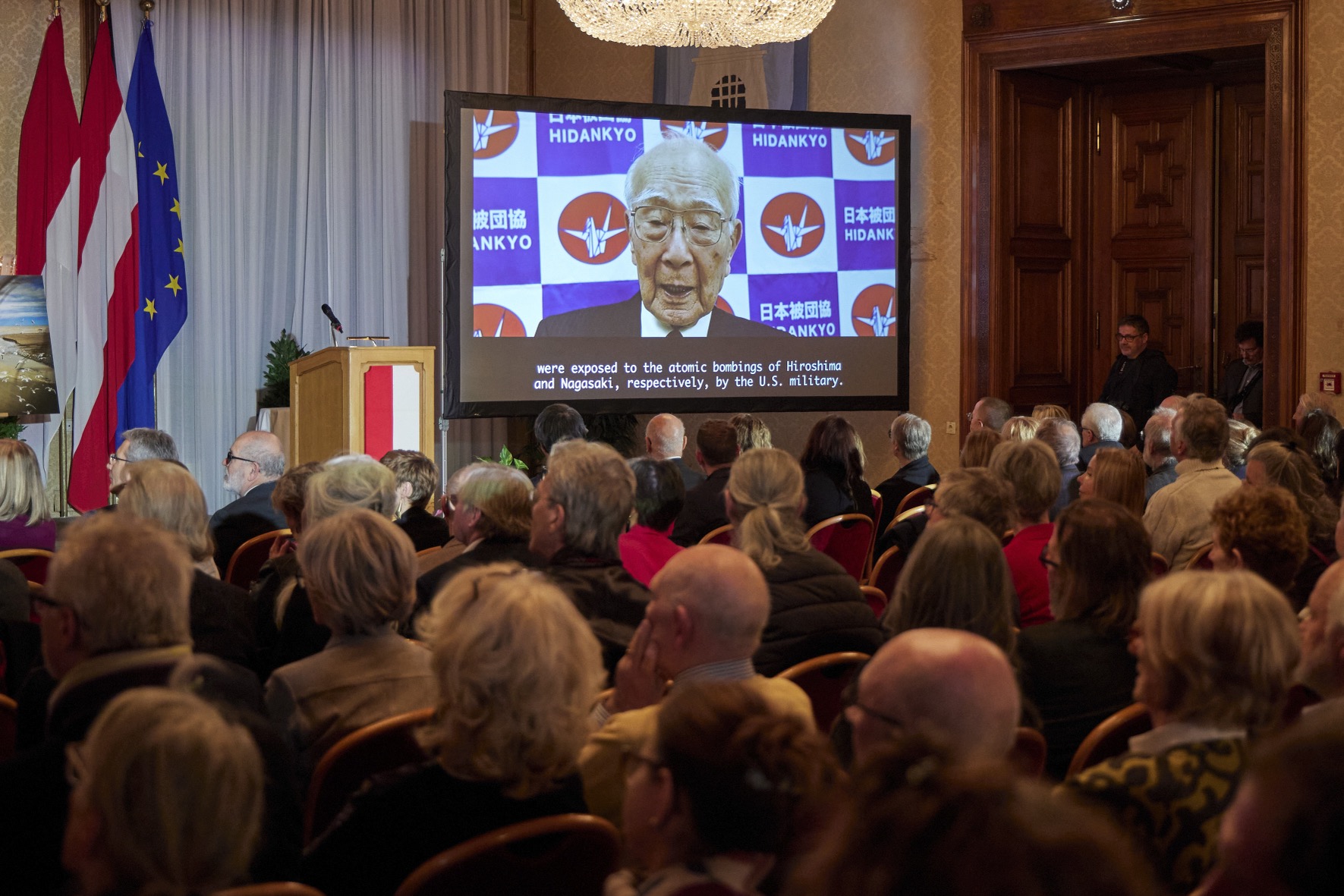
The keynote address of the evening was delivered by Terumi Tanaka, Secretary-General of Nihon Hidankyo. This Japanese peace organisation was awarded the 2024 Nobel Peace Prize. Nihon Hidankyo was founded by survivors of the atomic bombings of Hiroshima and Nagasaki and campaigns for international nuclear disarmament.
“We founded Nihon Hidankyo, the Japanese Confederation of A- and H-Bomb Victims’ Organisations, in August 1956. As survivors of the inhuman effects of the atomic bombings – damage that is unprecedented in history – we launched this movement.
I am one of the survivors of the atomic bombing of Nagasaki. It was 9 August 1945. Suddenly, I heard the hum of a bomber aircraft and, shortly afterwards, was enveloped in a blinding white light. The deaths I witnessed at that time could scarcely be described as human deaths. By the end of 1945, the death toll in Hiroshima was estimated at around 140,000 and in Nagasaki at 70,000.
It is the heartfelt wish of the Hibakusha that, rather than relying on the theory of nuclear deterrence, which presupposes the possession and use of nuclear weapons, we must not allow the possession of a single nuclear weapon. I therefore appeal to all people around the world to discuss together what we must do to abolish nuclear weapons, and to demand that governments take measures to achieve this goal.“
Paper cranes as a symbol of peace and disarmament.
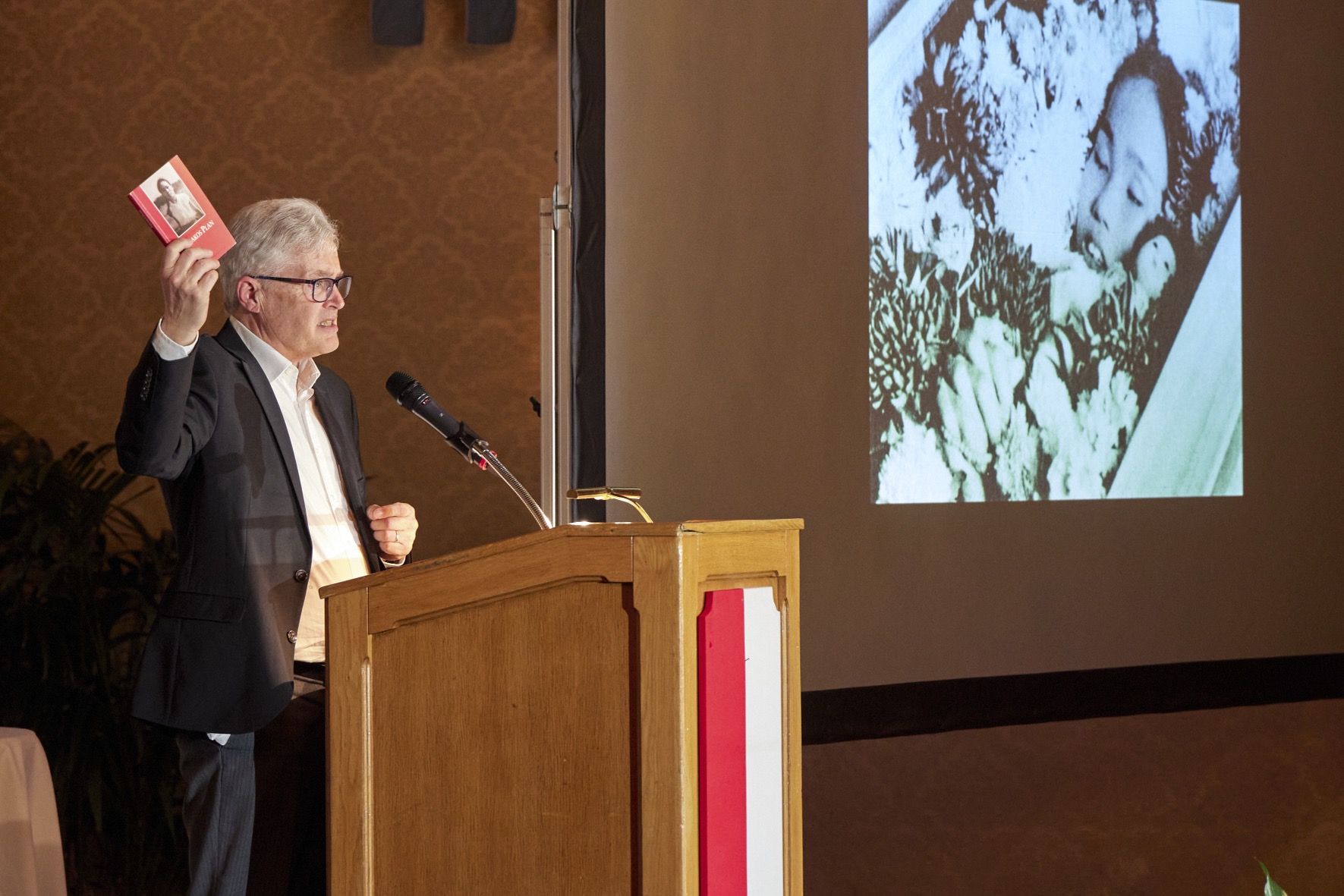
The evening also served as a reminder of the fate of Sadako Sasaki, another victim of the 1945 atomic bombing of Hiroshima. In 1955, at the age of twelve and having been the best athlete in her school class, she died of leukaemia, a late-onset consequence of the atomic bombing.
According to a Japanese legend, Sadako folded more than 1,000 paper cranes in the hope of surviving after the onset of her illness. Since then, paper cranes have been regarded worldwide as a symbol of peace and disarmament.
Sadako’s story continues to inspire millions of people worldwide to this day, including the teachers and pupils at Seitenstetten-Biberbach Primary and Secondary School. On the initiative of Josef Penzendorfer, a peace activist and director of Sadako projects, they folded many cranes in a project in 2009 and sold them to well-wishers in order to invite Sadako’s brother Masahiro to Austria. His visit led to the decision to distribute the last five cranes folded by Sadako across the five continents of our planet. The ‘European Crane’ found its way from Seitenstetten-Biberbach to the Peace Library in Stadtschlaining.
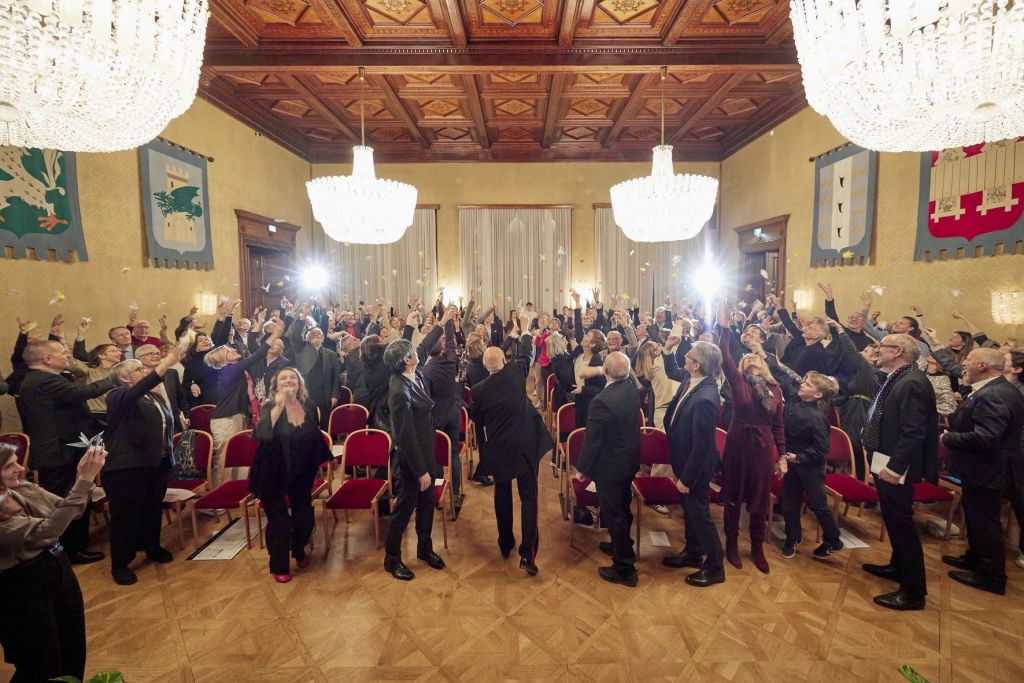
20 pupils from Seitenstetten-Biberbach Secondary School took part in the award ceremony. In the weeks leading up to it, they had folded 250 cranes from original origami paper. These were distributed to the event’s visitors at the end of the ceremony. And released into the night sky by them as a symbol of hope for peace.
About the Global Peace Photo Award 2025
A total of 24,189 images from 132 countries were submitted to the Global Peace Photo Award 2025. The majority of entries came from Iran, India, Germany, Russia and the USA. The entries were judged by a high-calibre international jury. See: https://globalpeacephotoaward.org/jury
The Global Peace Photo Award is organised in cooperation with Edition Lammerhuber, the Photographic Society (PHG), UNESCO, the Austrian Parliament, the Association of Parliamentary Editors, the International Press Institute (IPI), the World Press Photo Foundation, POY LATAM, LensCulture, APA – Austria Press Agency, the German Photographic Society (DGPh), UNICEF Austria and the Vienna Insurance Group.
The prize was inspired by the Austrian pacifist and writer Alfred Hermann Fried (* 11 November 1864 in Vienna; † 4 May 1921 in Vienna). Fried was awarded the Nobel Peace Prize in 1911 together with Tobias Asser, organizer of the first International The Hague Peace Conference and instigator of the Permanent Court of Arbitration.
For questions and enquiries please contact:
Lois Lammerhuber
lois.lammerhuber@friedaward.com
www.globalpeacephotoaward.org

Photos from the Award Ceremony © Thomas Topf